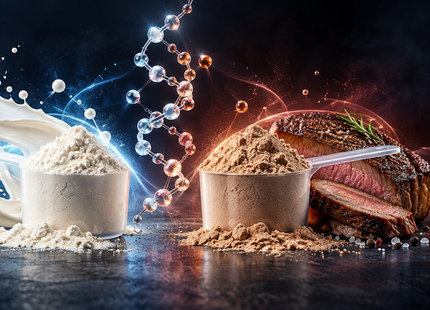

Whey protein vs beef protein has no universal winner. Both can help active adults meet protein needs, but they differ in source, amino-acid profile, digestion, dietary fit, and research depth.
For muscle growth, daily protein, resistance training, energy intake, and consistency matter most. Choose a useful protein you tolerate and can take regularly.
What Are Whey Protein and Beef Protein?
Whey is milk-derived. Whey concentrate retains more lactose and fat, while whey isolate usually contains proportionally more protein and less lactose. Hydrolyzed whey is partially broken into smaller peptides.
Beef protein powder comes from bovine material and is often sold as an isolate or hydrolysate. Formulas vary: some rely heavily on collagen peptides, whose essential-amino-acid profile differs from whey. Do not assume every beef powder is nutritionally equivalent.
Whey Protein vs Beef Protein: Nutrition and Absorption
Whey provides all nine essential amino acids and is rich in leucine, which helps initiate muscle protein synthesis. It digests rapidly, making it convenient around training, but faster absorption does not guarantee greater long-term muscle gain.
Hydrolyzed beef protein contains smaller peptides, but its nutritional value still depends on the raw material and amino-acid profile. Total protein alone does not confirm balanced essential amino acids.
The International Society of Sports Nutrition protein position stand emphasizes adequate essential amino acids and leucine. Compare protein, leucine or EAA information, calories, allergens, and serving size rather than relying only on terms such as "isolate" or "hydrolyzed."
What Does the Evidence Say About Muscle Growth?
Protein supplements can support muscle and strength gains when they help meet nutritional needs alongside progressive resistance training. They cannot compensate for inconsistent training, insufficient energy, poor sleep, or an inadequate diet.
Whey has been studied extensively for muscle protein synthesis and training adaptations. A large systematic review of protein supplementation and resistance training found modest additional improvements in muscle mass and strength, with benefits leveling off around a total intake of approximately 1.6 g/kg per day for many adults.
Beef protein has a smaller evidence base. A systematic review of beef protein supplementation found no significant difference between beef and whey protein for lean body mass or fat mass.
However, the review included only seven varied studies involving 270 participants. These findings do not prove that every beef protein powder is nutritionally equivalent to whey.
Who Might Prefer Each Type?
- Whey may suit: People who tolerate dairy and want a well-studied, leucine-rich protein.
- Beef protein may suit: People avoiding dairy who prefer an animal-derived alternative.
- Either may suit: Adults who need a convenient way to close a dietary protein gap.
Neither is necessary if food already covers your protein needs. Use the Laperva protein calculator as a starting estimate, then consider your body size, training level, and overall diet.
How Much and When Should You Take It?
The NIH exercise and athletic-performance guidance notes that athletes commonly need approximately 1.2-2.0 g of protein per kilogram of body weight daily.
Research guidance often uses 20-40 g of high-quality protein per meal, but this is not a universal recommendation.
Count food and supplements together and distribute protein across meals. Taking a serving before or after training can be convenient, but consistent daily intake matters more than following a narrow "anabolic window."
Follow the product label unless a qualified healthcare professional recommends otherwise.
Safety and Tolerance
Protein powders can cause bloating, nausea, or changes in bowel habits.
Whey is unsuitable for people with a milk-protein allergy. Lactose tolerance may also vary, even when using whey isolate.
Beef-derived products require caution for people with a beef allergy, alpha-gal syndrome, or relevant dietary restrictions.
Seek professional advice before use if you:
- Are pregnant or breastfeeding.
- Are under 18 years old.
- Have kidney or liver concerns.
- Have a chronic medical condition.
- Have known food allergies.
- Regularly use medications.
Supplements should not replace balanced meals, hydration, suitable training, adequate sleep, or medical care. Laperva's supplement education articles provide additional responsible-use guidance.
How to Compare Protein Labels
- Protein per serving: Compare the protein amount with the total scoop size, not only the front-label claim.
- Protein source: Identify whether the product contains concentrate, isolate, hydrolysate, or collagen-based material.
- Amino acids: Look for a transparent EAA and leucine profile when available.
- Dietary fit: Check for dairy, lactose, gluten, soy, sweeteners, and relevant certifications.
- Testing: Competitive athletes should look for credible third-party certification.
More practical food and macronutrient guidance is available in Laperva's nutrition articles.
Choosing a Laperva Protein Option
For a milk-derived isolate, Laperva Iso Triple Zero Next Generation Whey Protein lists approximately 28 g of protein per serving, varying by flavor, from a scoop of approximately 30 g. It may suit adults who tolerate milk-derived protein.
For a dairy-free format, Laperva Iso Triple Zero Beef Clear Hydrolyzed Protein Isolate lists 27 g of protein per scoop. It produces a clear strawberry-watermelon drink and is labeled free from lactose, dairy, gluten, soy, sugar, and GMOs.
Compare the current product label with your protein target, dietary preferences, tolerance, and training plan. Seek professional advice when allergies, medical conditions, or therapeutic diets are involved.
Frequently Asked Questions
Is Beef Protein Better Than Whey for Muscle Growth?
No. Limited research reports similar body-composition outcomes, but whey has a larger evidence base and a predictably strong essential-amino-acid profile.
Is Beef Protein Always Dairy-Free?
Not necessarily. Manufacturing facilities and added ingredients vary, so check the allergen statement every time.
Does Hydrolyzed Protein Build Muscle Faster?
No. Hydrolysis may speed digestion, but it does not guarantee superior long-term muscle growth. Protein quality, total intake, training, and consistency matter more.
Can Lactose-Intolerant Adults Use Whey Isolate?
Some people can tolerate whey isolate because it usually contains less lactose than whey concentrate. However, tolerance varies. Consider a dairy-free alternative if symptoms persist.
Can Protein Powder Replace Meals?
Not routinely. A protein shake may lack fiber, essential fats, and the micronutrient variety provided by balanced meals.
Whey Protein vs Beef Protein: Practical Takeaway
Whey protein has the stronger research base and a naturally leucine-rich profile. A transparent beef protein isolate can be a practical dairy-free alternative.
Muscle growth depends mainly on progressive resistance training and adequate daily protein, not one specific powder. Review the verified Laperva options, compare their current labels, and choose the format that fits your diet, tolerance, and goals.